Tuesday, 4 March 2014

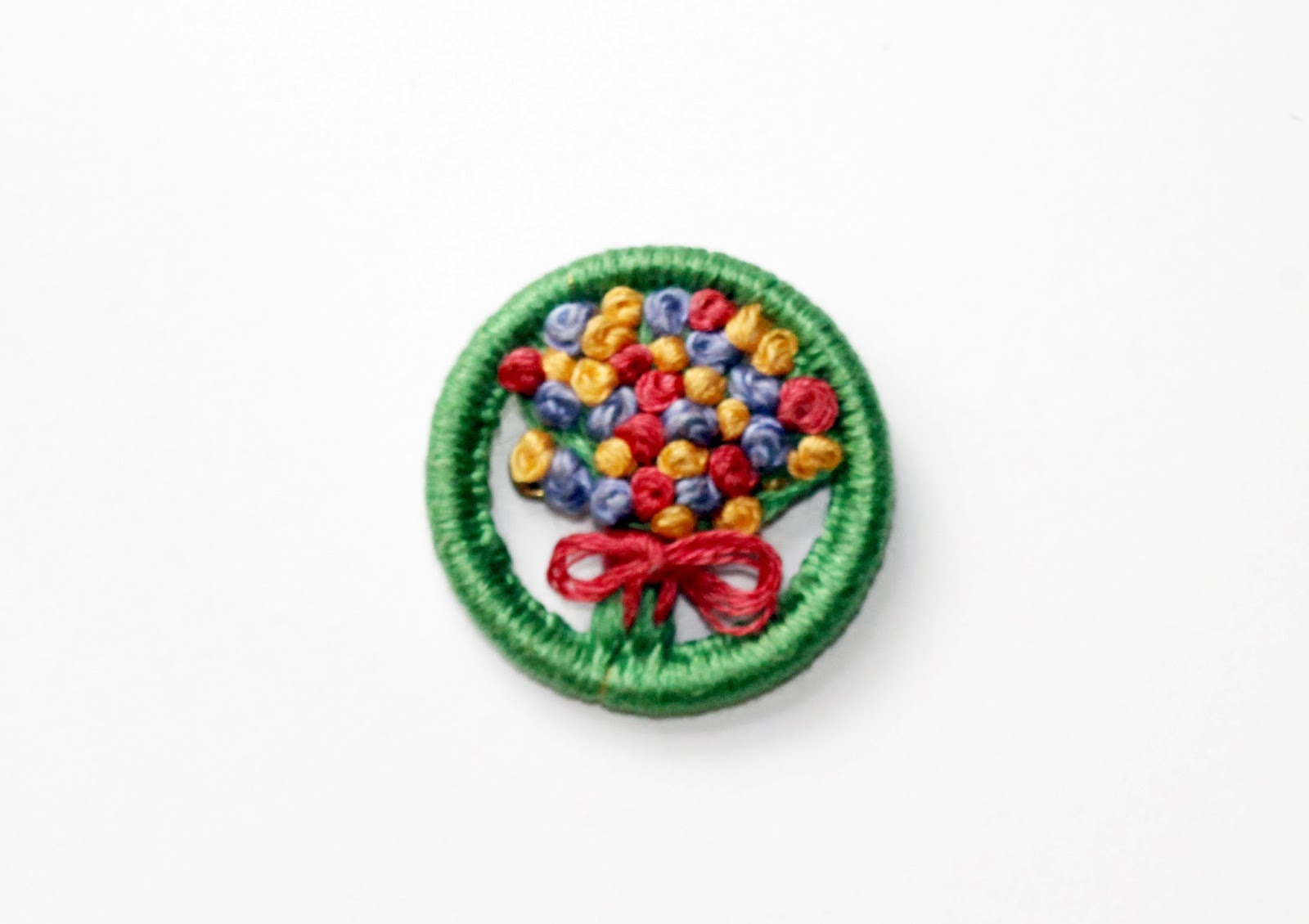
Making More: Woollen Bouquets

A couple of examples of brooches from the 1930's-40's...again using the curtain rings as a central core, but with wool this time and incorporating some french knots for blooms. This style appears earlier than the plastic brooches. I can imagine people using remnants left over from knitting garments, the odd scraps you are left with, put to good use.

Monday, 3 March 2014

Making More:The Taster Day

More information has been posted today on the LV21 website about the "Making More" commission and the Taster day coming up in a few weeks. Below is some text from the website and the postcard showing a glimpse of some of the brooches we will be making in the project!

"Make Do and Mend – a Making More taster workshop with Joanne Haywood | Sat 15 March 1pm-5pm | Free Suitable for over 16 year olds only".

"We’re delighted to announce that LV21 in partnership with Making Space have commissioned designer-makers Joanne Haywood and Stella Harding to work on an exciting Arts Council England funded pilot project Making More, researching a new business model which focuses on the development of making skills at a local level in Kent/Medway and Hampshire/West Sussex Border".

"Inspired by the model adopted by the Rural Industries Bureau in the 1930s recession, where local village women were trained in quilting and these quilts were then sold to the Dorchester, London, this research focuses on the ‘make do and mend’ attitude, social engagement and developing a skilled community workforce which can produce work to a high standard".

"Through a series of 12 half-day skills teaching sessions, Joanne Haywood, art jeweller specialising in mixed media, will work aboard LV21 to explore new ideas and design contemporary jewellery suitable for this production method, developing ideas in collaboration with a selected maker cohort and producing work for potential new retail market, with focus on collaboration with high footfall heritage and tourist venues".

"Joanne’s approach is inspired by the upcycling and traditional making skills from our past, specifically the 1940’s WWII period, where material uses were inventive and low tech, essentially producing luxury products from scrap materials".

To find out more and get involved, follow this link to the LV21 Website

Saturday, 1 March 2014

Making More: Materials

There are so many different materials used in jewellery during the 1930's-50's. I like to find out about the inventive ones, like an article in a 1940's magazine with instructions on how to make a brooch from a fir cone, by removing the tip of the cone, attaching a leather leaf and cord and painting the fir cone with enamel paint. Leather seems to have been used a lot and I guess much of it would have been off cuts from old clothing and household materials. Below is an example of a leather corsage, which shows signs that it would have had more paint on the surfaces.

Another example, again from the 1940's is this "Stockings" brooch. Made from stocking material that looks as though it has been dyed different colours. I can imagine someone like Ginger Rodgers wearing this one!

Making More: Researching the past

Here is another example of the plastic wire brooches I have been researching from the 1940's. The inside core they used is a curtain ring and the fastenings were usually an old tie pin...although sometimes you see them and the pin has been replaced with modern day safety pin, most of the ones I have seen have the tie pins remaining.

The one below has an old button in the shape of a little lamb in the middle, and you can see it has a double frame of two curtain rings. Besides the floral bouquet versions (which I posted an example of previously) buttons were another choice for what to put inside the curtain ring. I have included an image of the back too, as it's quite intereesting to see how they were finished.

Another type you can find examples of are cameo versions. These vary as much as the button and flower types and the scale can be very different. Some are quite large and intricate like the one below or they can be simpler. Different thicknesses of electrical wire casings were used. I have included an image of the front and the back again.

The plastic wire casing were also used to make other jewellery objects. I have been mainly focusing on brooches, but here is a detail from two necklaces made with the same plastic. When I was visiting Oxford I was very lucky to meet by chance a vinatge and costume jewellery dealer in Antiques on High. Caroline Henney. She was really generous with her time and knowlege on the area and we have kept in contact since. She looks out for pieces for me, for my research. Caroline sells online too and one of her specialisms is lucite brooches, which are also very beautiful.

Friday, 28 February 2014

Making More: Research

As a jewellery artist working in mixed media, I am naturally interested in how people have used unusual materials or combinations of materials in the past. An area I have been interested in for many years is Make do and Mend Jewellery from the 1940's. There is not very much recorded for this area and so it does have an air of mystery which appeals to me.

During WW2. Luxurious materials were in short supply for making "new" pieces of jewellery. Many people handmade their own jewellery and material choices were often very inventive. Scraps of plastic wire, textiles and leather as well as found objects such as fir cones and seeds were often used. Instructions for making your own jewellery were published in magazines.

One of the things I love about this kind of jewellery is how inclusive is it. Everyone could make it and it was very low tech. You didn't need any fancy pieces of equipment to produce it. There is something lovely about everyone being able to make their own from one set of instructions and them all being unique. I like to imagine who made them and how they might have looked on the garments of the time.

A while ago I found this brooch in an antiques shop in Rye. It is made with the plastic casing from electrical wire. Some sources say that women collected these scraps from the factory floor, although I did speak to someone who said that they could remember being able to purchase this wire from shops too. Some attribute the brooches to women making them at home for themselves and to sell, other say Italian prisioners of war made them. I have also heard and read accounts of them being sold in markets or outside the factories where the materials were collected.

I have been researching this area of jewellery in order to help me design and make my own series of brooches, using plastics,leather,felt,buttons,wool and household items. I will then be teaching others how to make them as part of the Making More project.

Making More

Back in November I was awarded a commission for "Making More" a pilot project organised by Making Space and LV21 Ltd with funding from Arts Council England.

Paivi Seppala (LV21) and Lynne Dick (Making Space), were looking to commission two UK-based designer-makers to work on a pilot project researching a new business model, focusing on the development of making skills at a local level in Hampshire/West Sussex Border and Kent/Medway areas. I was thrilled to be awarded the commission for Kent as it's the County I live in and love!

The project will involve me developing and delivering a programme of skills teaching sessions for jewellery. The group will then develop a collection of works in a number of workshops, to take forward and retail in local outlets.

The teaching element of the project will take place on LV21, a 40 metre steel-hulled lightship transformed into a floating art space and performance facility. The most unusual place I have ever taught in! I visited LV21 back in December and was amazed at the space and the diversity of events that take place onboard, including: gigs,residencies,workshops and school visits as well as arts management and consultancy.

The project was "inspired by the model adopted by the Rural Industries Bureau in the 1930s recession, where local village women were trained in quilting and these quilts were then sold to the Dorchester, London (later displayed in 2010 at the V&A Quilting exhibition)."

Stella Harding is the other artist, who will be working on the Hampshire project.

Over the next few months I will be sharing with you the development of the project.

Monday, 3 February 2014

Buttons

I have been collecting and get getting a bit obsessive about buttons recently, as part of my research for a new and very exciting commission (more news on that very soon!) By chance, a good friend of mine, Paula Lindblom, sent me some buttons as a Christmas gift from Sweden. The beautiful flower posies. I love the way they are all lined up in a regimented grid format. I have them displayed in my studio for the moment as they are just nice to look at and have about me in my environment as I think and make.

The other ones, little pink bunnies, also on the original backing card are an eBay find. I may keep these on the card for a while to look at. I have got quite attached to these ones, so they may never make it into a jewellery object!